
From My Soul to the World
靈與世界的告白
Research Motivation
The 20th-century Norwegian Expressionist artist Edvard Munch (1863–1944) once stated: "True art comes from the inner world of the human being." For thousands of years, the human figure has remained the central axis of discourse in the field of art. The notion that humans are the "soul of all creation" implies a spirituality that transcends other species. We navigate this world equipped with a complex spectrum of emotions and desires, possessing the intellect to transmit knowledge and technology. From a theological perspective, humans are God’s unique creation, granted the authority to manage the world and the power to name all things.
The "Soul" is a concept that holds a profound interest for me. It stands in contradiction to the scientific era we inhabit, yet it frequently stirs our desires, inadvertently revealing its existence at specific moments. In his writing, the Czech author Milan Kundera (1929–2023) described the plight of the soul and body: "In earlier times, people listened to the beating of their hearts with fear, wondering what it was. At that time, people could not yet equate themselves with their bodies. The body was a cage, and inside there was something watching, listening, fearing, thinking, and being amazed; take away the body, and this thing remains—that is the soul."
History is replete with paintings that explore the inner dimensions of the self. Among them, the Post-Impressionist painter Paul Gauguin (1848–1903), following the loss of his daughter, created Where Do We Come From? What Are We? Where Are We Going?. Through painting, he posed the most fundamental questions of life, which resonated with a certain deep-seated uneasiness and palpitation within my own soul.
My childhood was marked by a fractured family and difficulties in interpersonal relationships; I often felt lonely and insecure, and was frequently plagued by nightmares at night. Later, in the process of growing up, I accidentally came into contact with many different religions. Among them, Christianity has had the longest and most significant impact on my thoughts. In the Christian concept, the soul does not reincarnate; there is only eternal life or eternal death. God is the redemption for the imperfect soul, washing away human sin with His precious blood. However, although I believe in God, I often feel fearful and powerless regarding this theory of soul redemption. This is especially true when facing the accidental death of my mother and the pain of my own illness. Various questions about faith and life have surfaced one after another, yet I have never been able to find a comprehensive answer through a single theory. Therefore, I hope to transcribe my emotions and childhood memories through painting. Through repeated philosophical speculation during my growth process, I attempt to explore the various relationships between life and faith, and between faith and the self.
Portraiture
To me, painting is the most suitable medium for expressing inner emotions. Unlike text, which is precise, painting is filled with imaginative space and power, offering an alternative way of viewing the world.
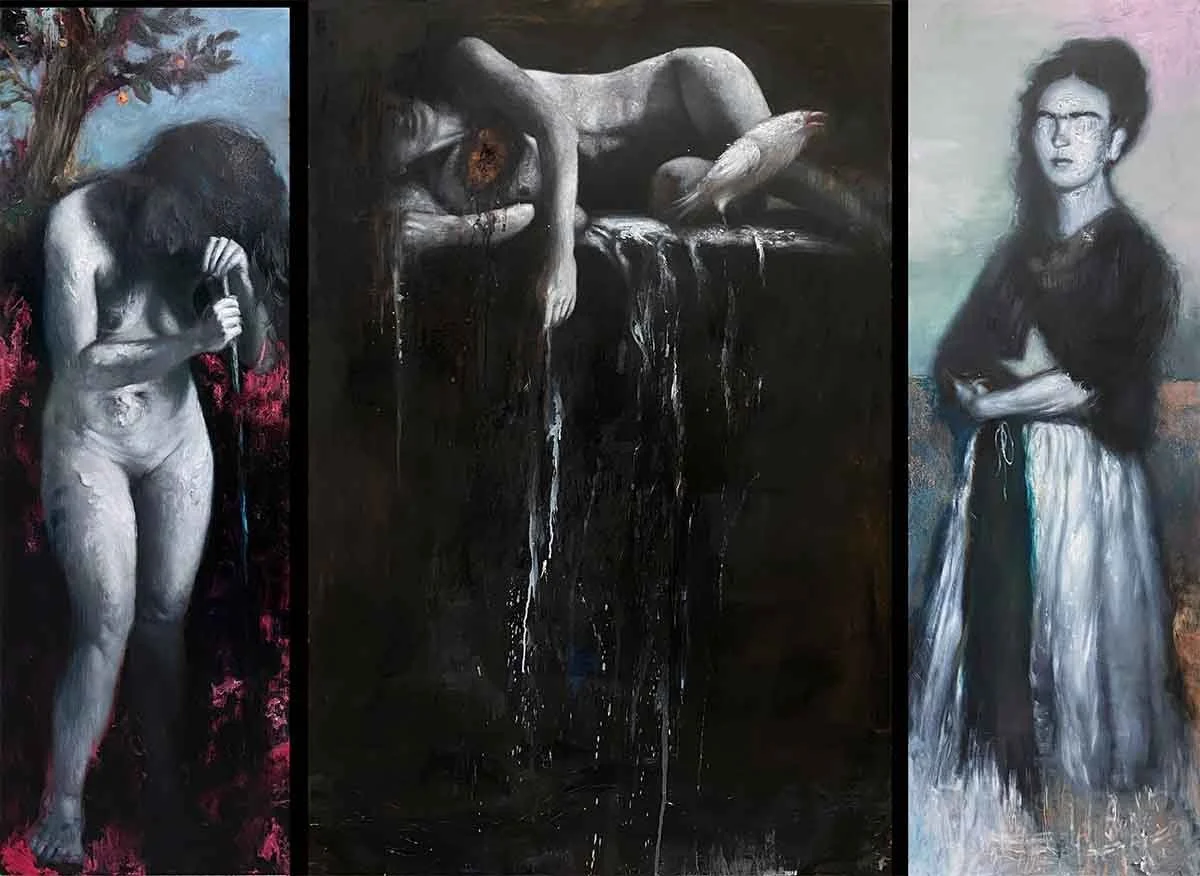
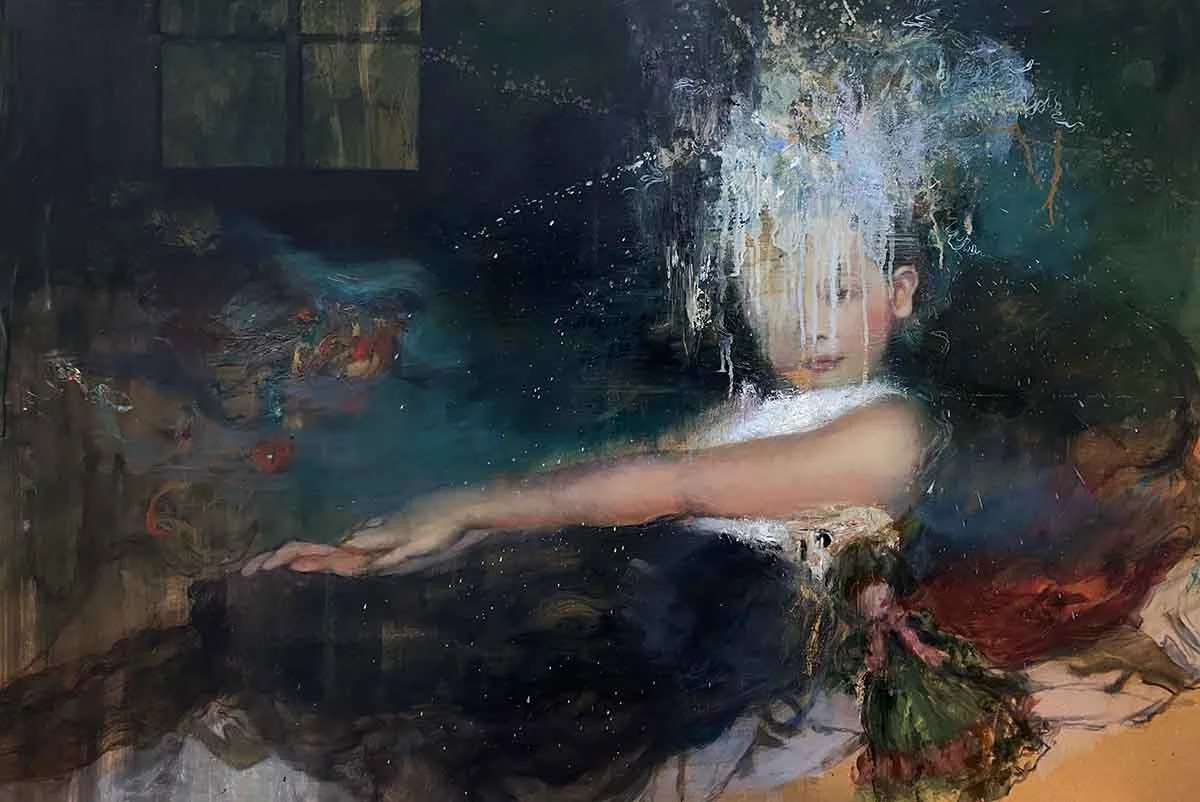
Among various painting themes, "Portraiture" possesses a mysterious attraction—sometimes powerful enough to transfix me in front of a canvas, causing me to lose track of time. I am particularly fond of the portraits by the 17th-century Dutch artist Rembrandt van Rijn (1606–1669). His subjects, often bathed in a holy light, seem to gaze silently forward in solitude amidst the darkness. Beneath the surface skin of the people in his paintings, complex facets and emotions are often hidden. Through their eyes and the lines of their facial muscles, a silent language is conveyed, vaguely evoking the viewer's desire to pry into their inner hearts. Consequently, the solitary portrait has always been my preferred creative theme. However, in this series, I deliberately blurred the faces of certain figures, using scraping, covering, and omission to treat the facial features. In doing so, the viewer cannot know the expression or emotion of the character, nor can they precisely identify their identity. Thus, a vast imaginative space is generated between spirit and flesh, adding a sense of mystery and a surreal atmosphere.
Foo's Journey
Portrait of a New Born
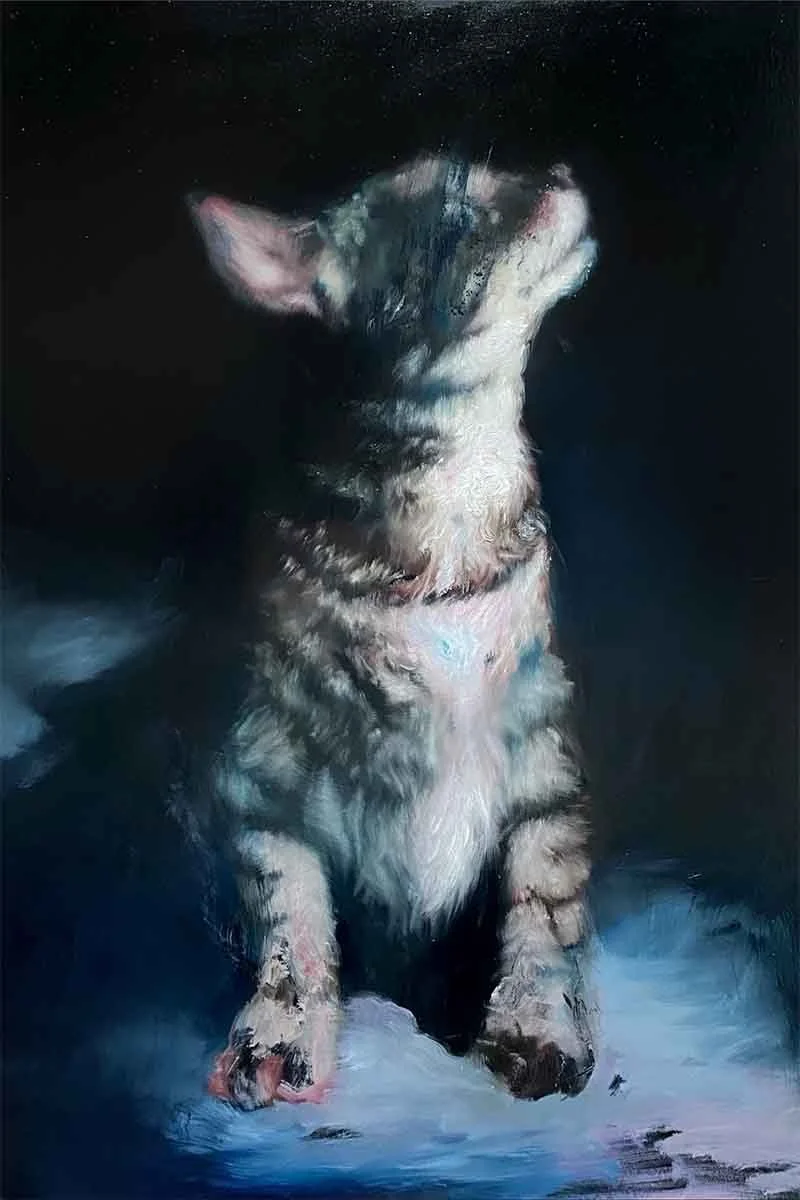
Night Cat

Song of Life #1
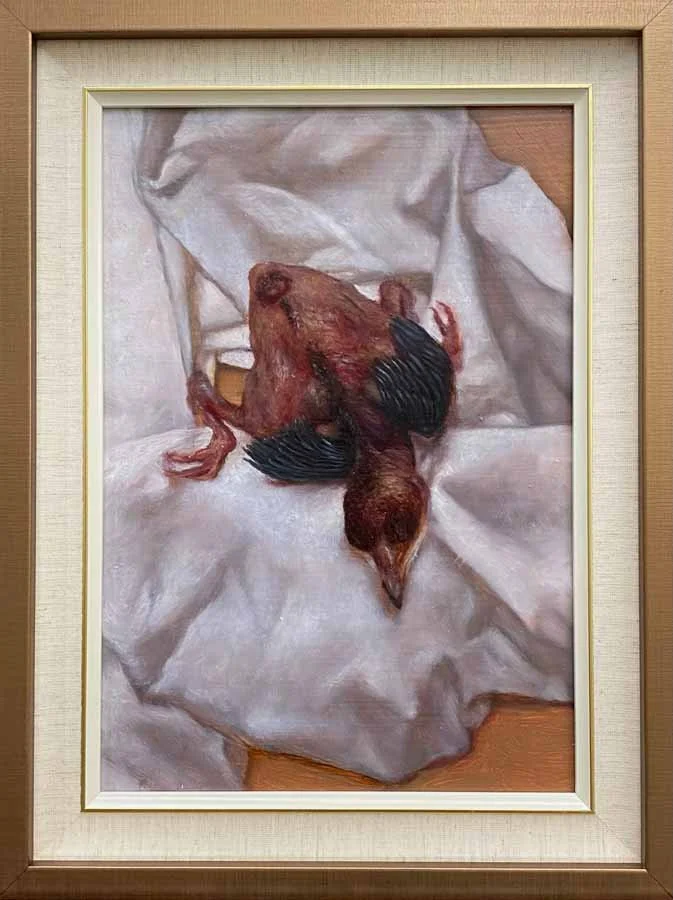
Song of Life #2

Song of Life #3
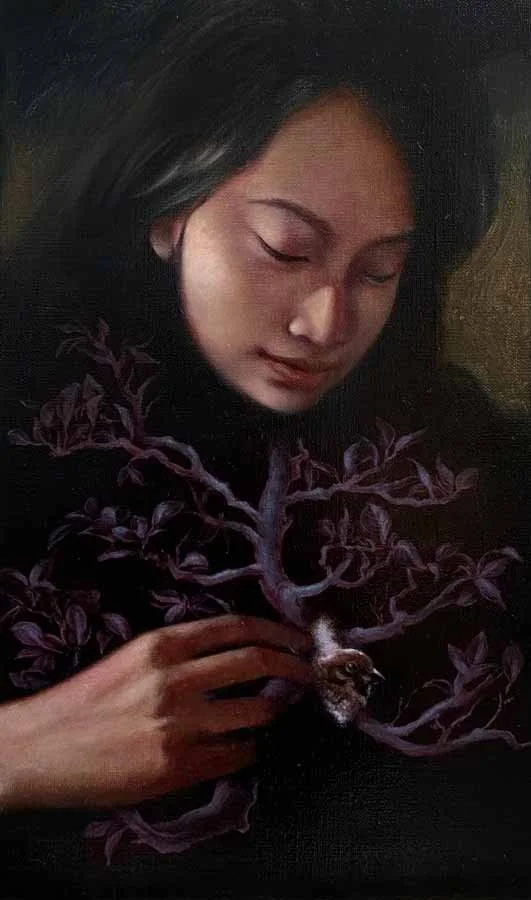
Midnight Check-in
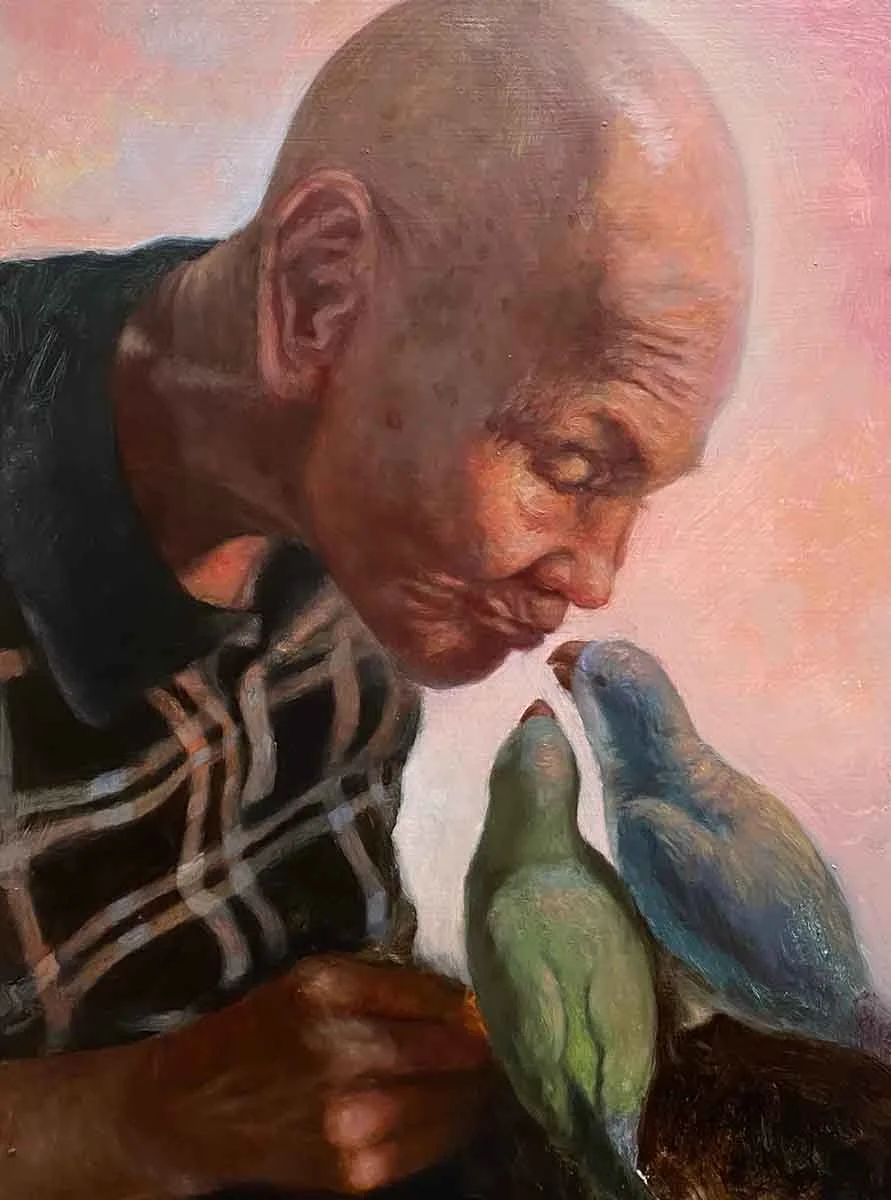
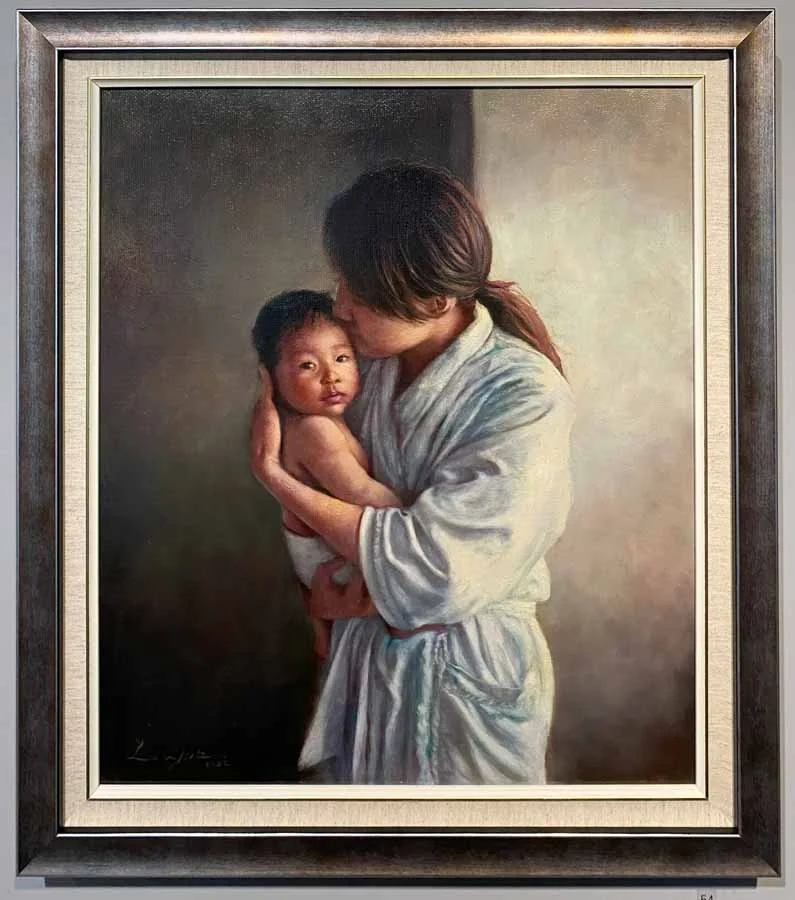
Circle of Love
Imagery of Death
The famous psychologist Sigmund Freud (1856–1939) proposed the theory of the "death drive" (or death instinct), suggesting that humans have two major drives: instinctive reactions to sex and death. Of these, "death" has always been a taboo subject in traditional Chinese society. When I was young, whenever we passed a grieving family, my parents would cover my eyes and hurry past. My first impression of death came from accidentally catching a glimpse of a black-and-white portrait of an old man at a funeral—a strange, gaunt face staring straight ahead, his life frozen amidst the sound of weeping.
In contrast to the domestic avoidance of death, 19th-century Victorian England saw the popularity of post-mortem photography. These photos were usually taken shortly after a person died; the bodies were posed standing or lying down, sometimes alone, sometimes in a group with other deceased individuals, or even with the living. In the photos, the deceased, dressed in fine clothes, might look slightly stiff or strange, but often appeared merely to be in a deep sleep. Some even looked as if they had accidentally blinked at the moment the photo was taken, freezing a beautiful yet slightly eerie and incredible atmosphere.
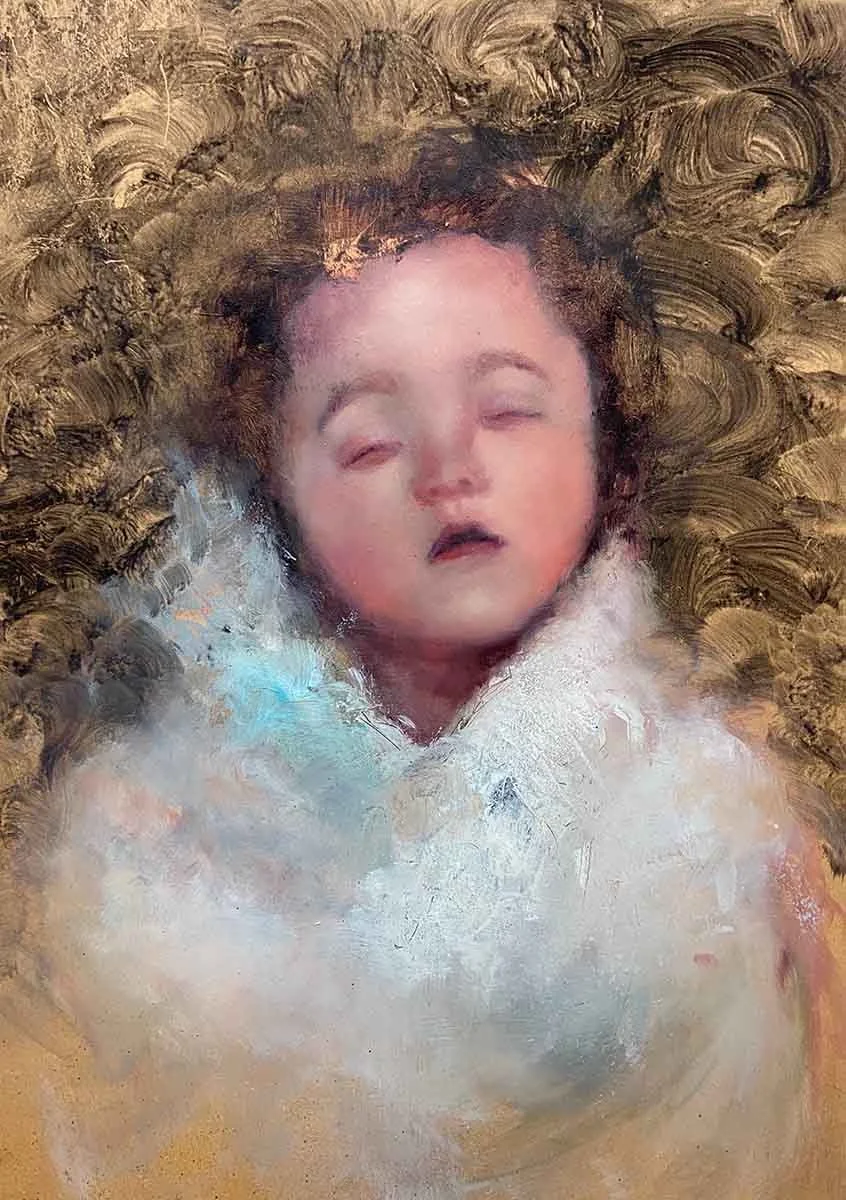
I have carefully observed newborns in incubators at hospitals, and in the same location, I have watched life fade into death. These conflicting sensory experiences have continuously generated certain sentiments at unnoticed moments, pouring endlessly into my world. Therefore, in this series, one can see figures with slightly vacant facial expressions. They resemble the moment just before God breathed the breath of life into man's body at the dawn of creation, or perhaps more like the liminal state before the end of life: the soul and body pulling at each other, trembling, engaging in a great competition across dimensions. Interestingly, we will never know what is being thought inside that failing shell—is it fear? Fragments of life? Or a final, sincere confession to the gods?
Reflection on Faith
Compared to the rigor and absolute piety of ancient biblical painting, people today have been greatly liberated in the production of religious art. The function of biblical murals is no longer to educate people; instead, scientific thinking has taken the lead. I consider my religious experience to be quite rich, and as a result, I often fell into self-contradiction and questioning during my upbringing. Like most Taiwanese people, I was born into a Daoist family, where my elders devoutly worshipped five statues of deities and ancestral tablets. In my early childhood, due to my mother, I entered the I-Kuan Tao temple, participating in many complex rituals and adhering to a vegetarian diet for a time. Later, while playing in a park, I met foreign Mormon missionaries and entered the Mormon church. At that time, missionaries visited our home frequently. I remember one occasion when a missionary pointed curiously at the statues in our house, which provoked the ire of my grandfather, who banned them from ever entering our home again.
By junior high school, at a stage of intense intellectual exploration, I encountered Christianity and found immense spiritual salvation and comfort in it. However, at the same time, monotheistic Christianity caused a severe rift between my family and me. I even suffered greatly during my mother’s funeral over whether I should hold incense or chant sutras for her. Today, after years of devotion, my perspective has broadened, and inevitably, many doubts regarding myself and my faith have arisen.
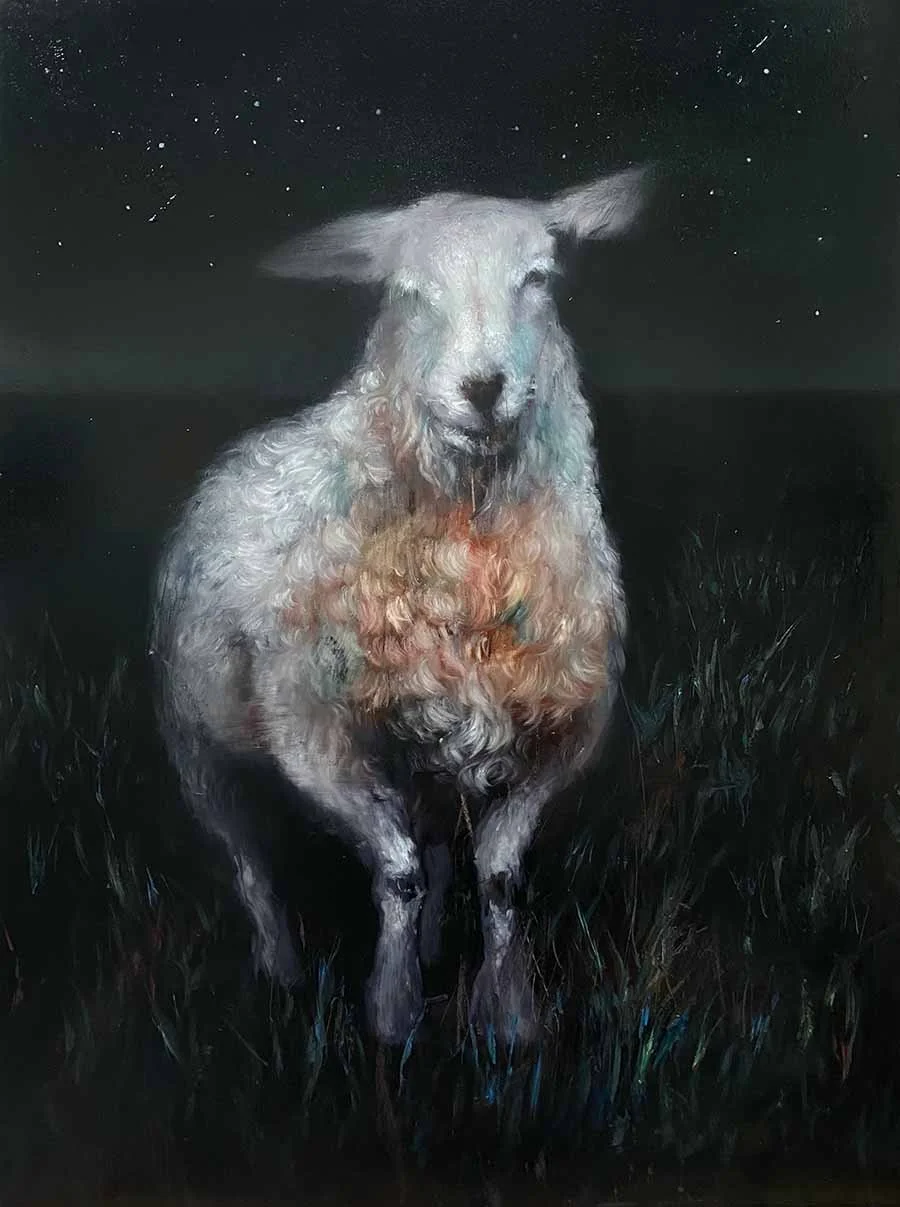
The Holy Lamb
The Smiling Lamb
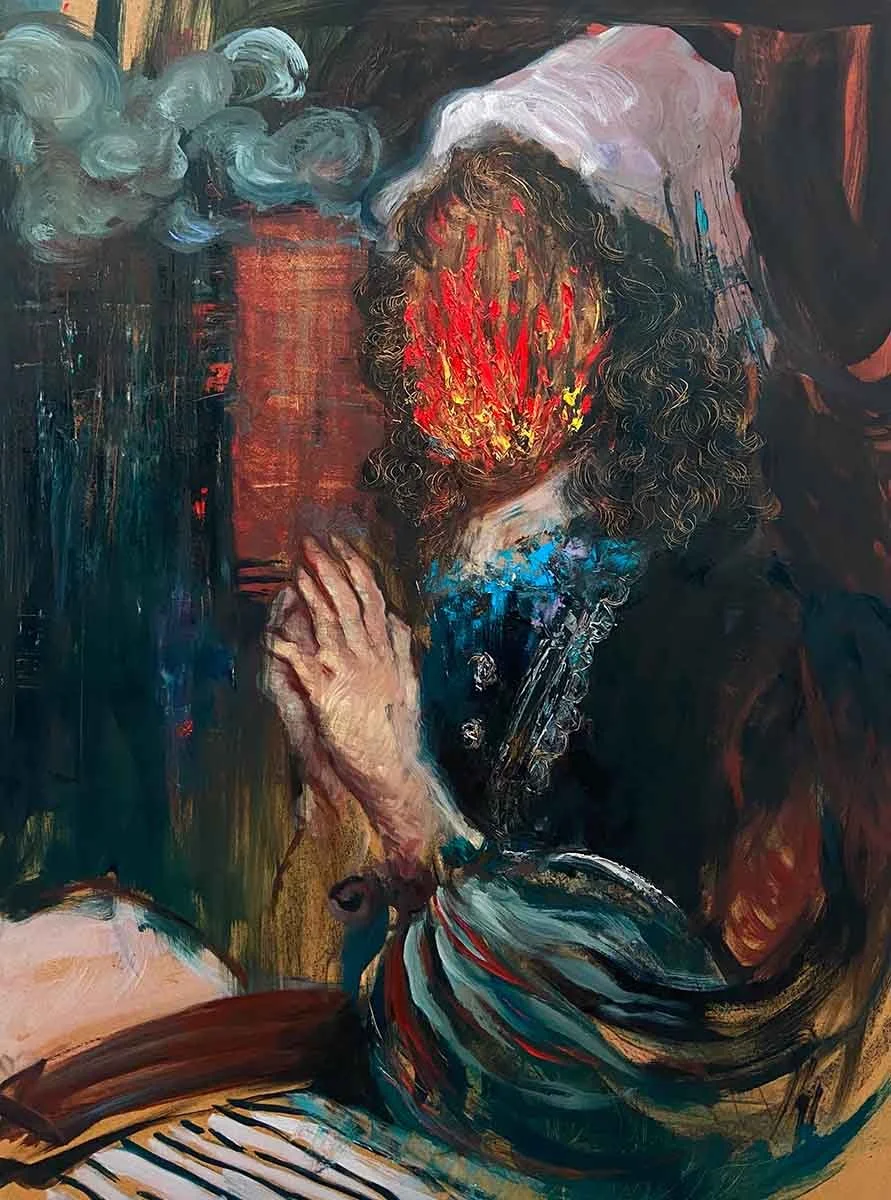
Woman in Prayer
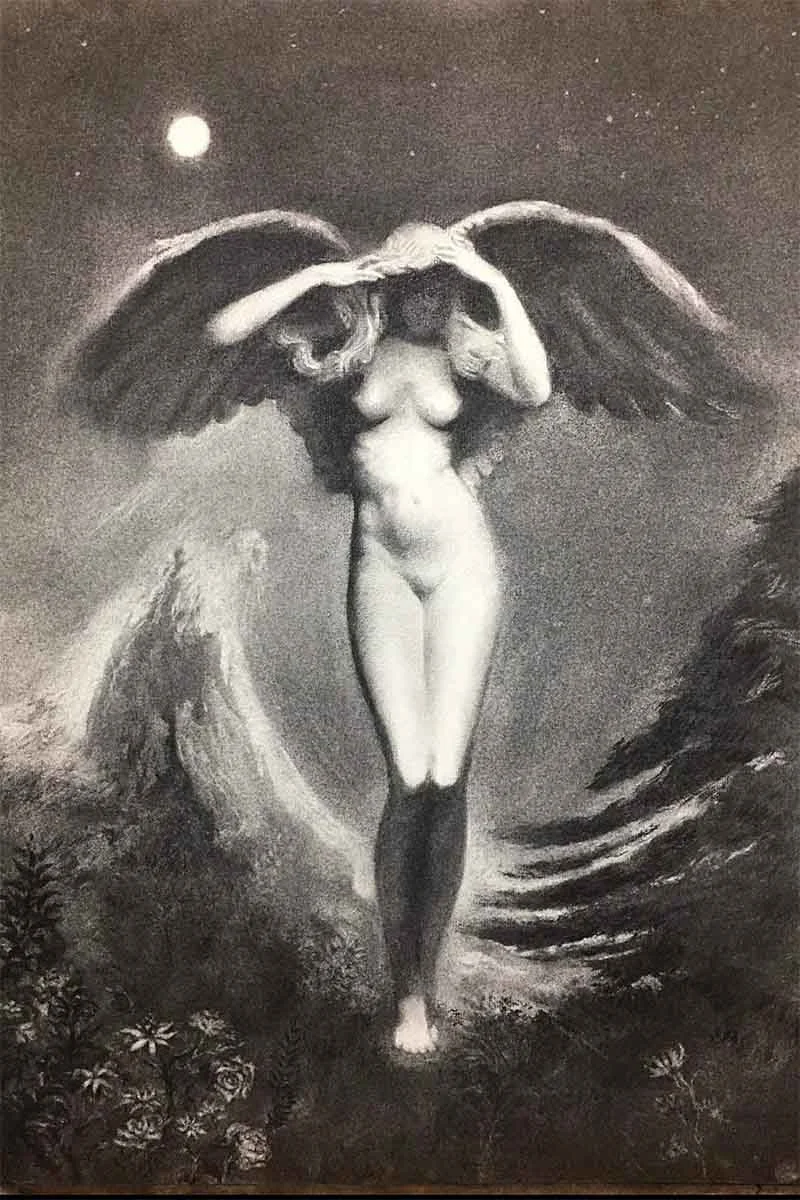
Untitled Sketch
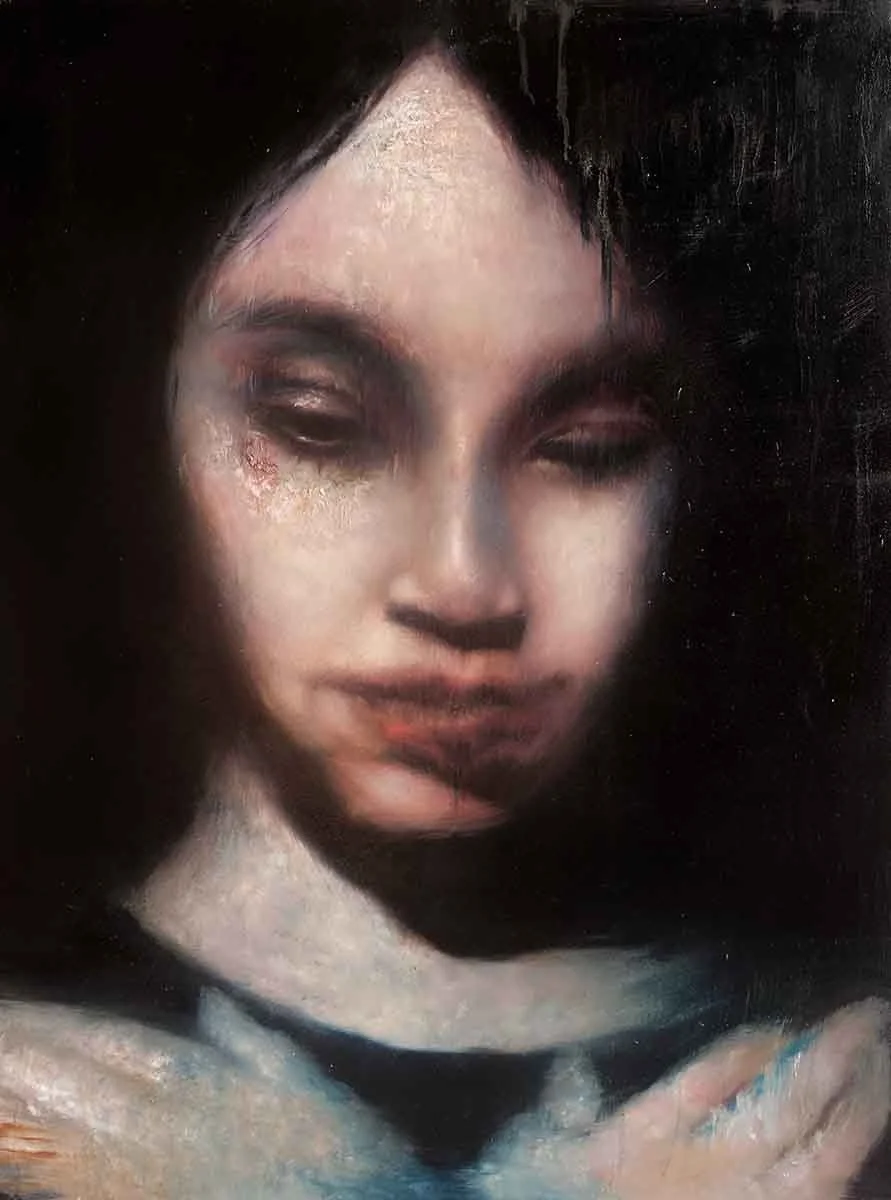
The 6th Day #2
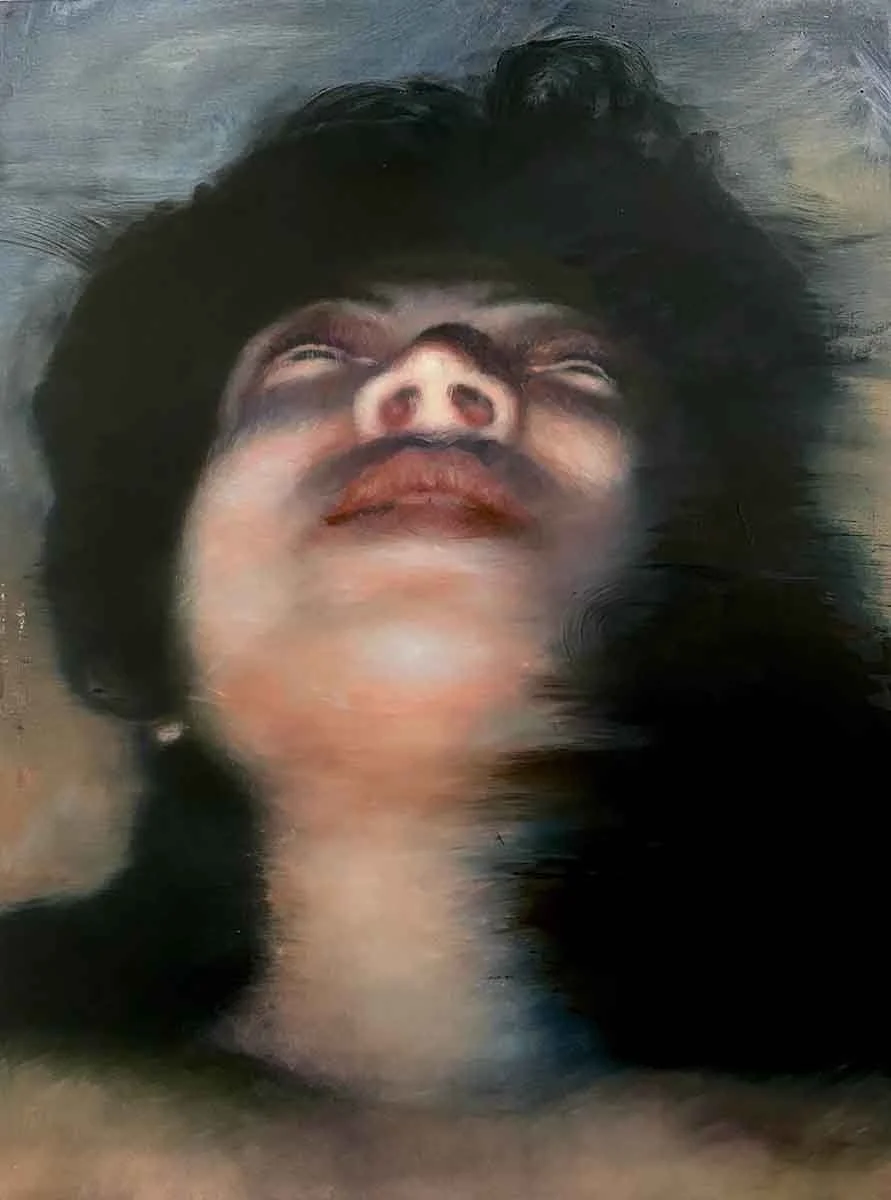
Self Portrait
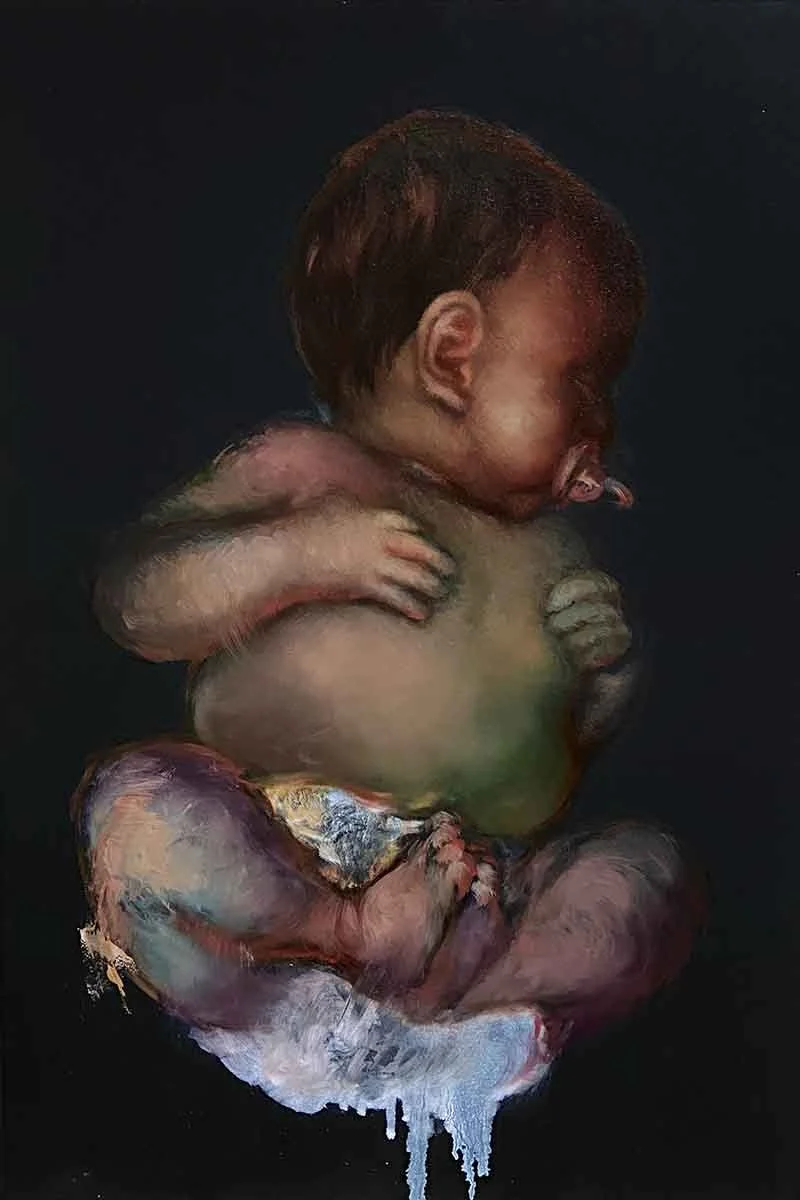
New Born #1
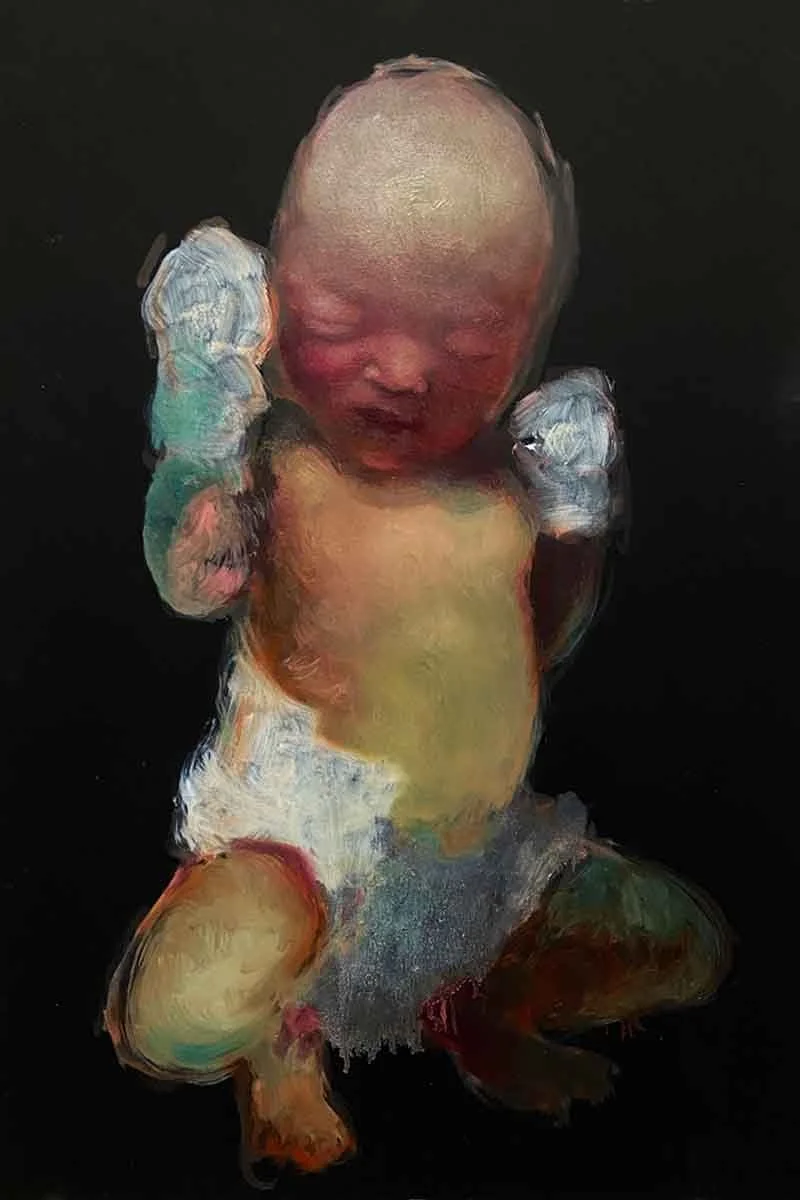
New Born #2
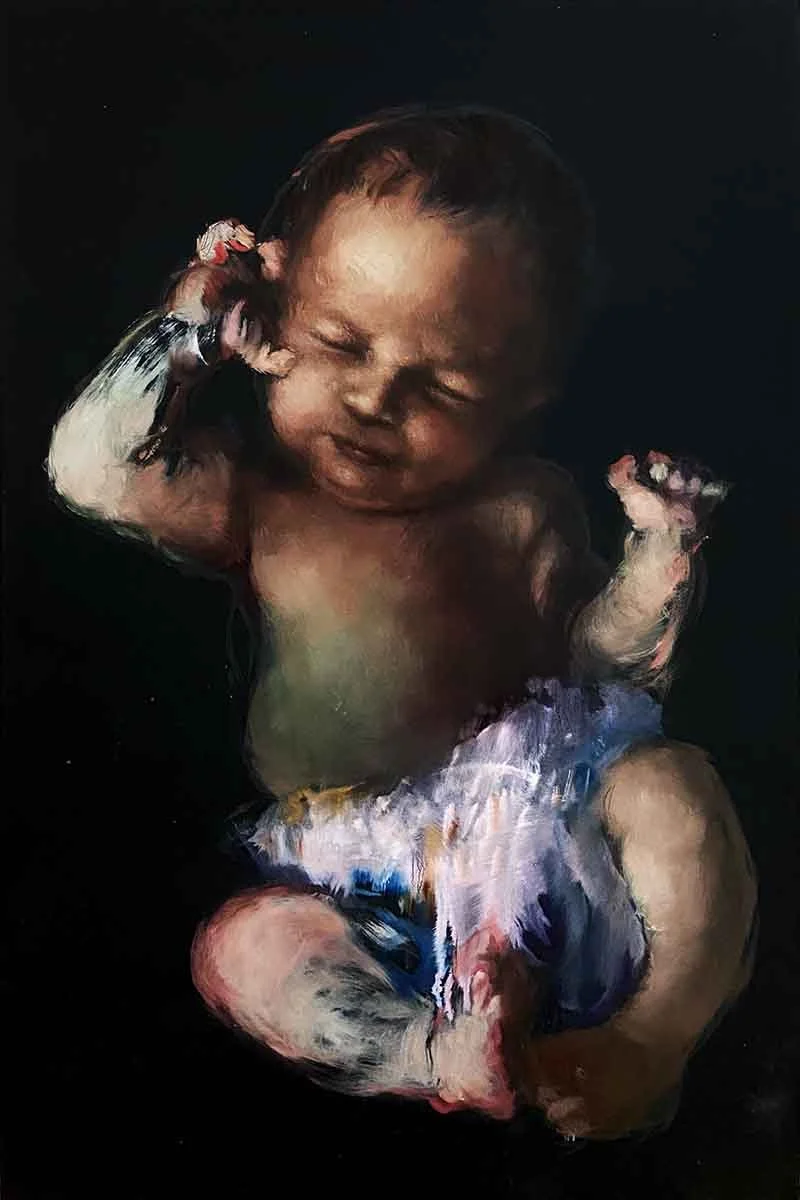
New Born #3
Two years ago, I watched a biographical film about the 20th-century Mexican painter Frida Kahlo (1907–1954). I was deeply moved, frequently wiping away tears. Kahlo’s life was extremely rugged; she was bedridden early on due to a major car accident, experienced multiple romantic frustrations (her husband, the artist Diego Rivera, was a serial philanderer who even had an affair with Kahlo’s own sister), and suffered multiple miscarriages. Only through painting, writing letters, and constant self-documentation could she soothe her inner pain. This reminded me of a passage in Genesis in the Bible:
"Unto the woman He said, I will greatly multiply thy sorrow and thy conception; in sorrow thou shalt bring forth children; and thy desire shall be to thy husband, and he shall rule over thee." (Genesis 3:16)
Years ago, when I first heard the concept of "Original Sin" in church, I felt a deep sense of injustice. What does the sin of ancestors have to do with me? We live in a society that does not believe a son should pay his father's debts, yet we are expected to believe that humans are born bearing the sins of their ancestors? Furthermore, with the rise of feminist consciousness today, how should I, as a female creator and believer, interpret such scriptures? Setting religion aside, regarding the trajectory of a life: are there many destinies and coincidences hidden within? Or is everything merely an extension of the gestures of countless people and events? We have no way to excavate the truth, nor is it easy to predict.
In summary, driven by my love for painting and my perception of the duality of spirit and flesh, my upcoming research aims to explore deeply how painting can closer approach the inner soul. In addition to continuing the creation of this series, I will organize historical art and literature related to the soul, theology, and philosophy. (I recognize that the breadth of these fields cannot be thoroughly researched in just a few years, so I will focus my in-depth research in the direction of my personal creative work.) I intend to reinforce and correct deficiencies in technique and discourse. I hope that under the guidance of your institution, I can conduct a complete reorganization of my personal creative vocabulary and context, embodying the contemporary nature of traditional painting media.